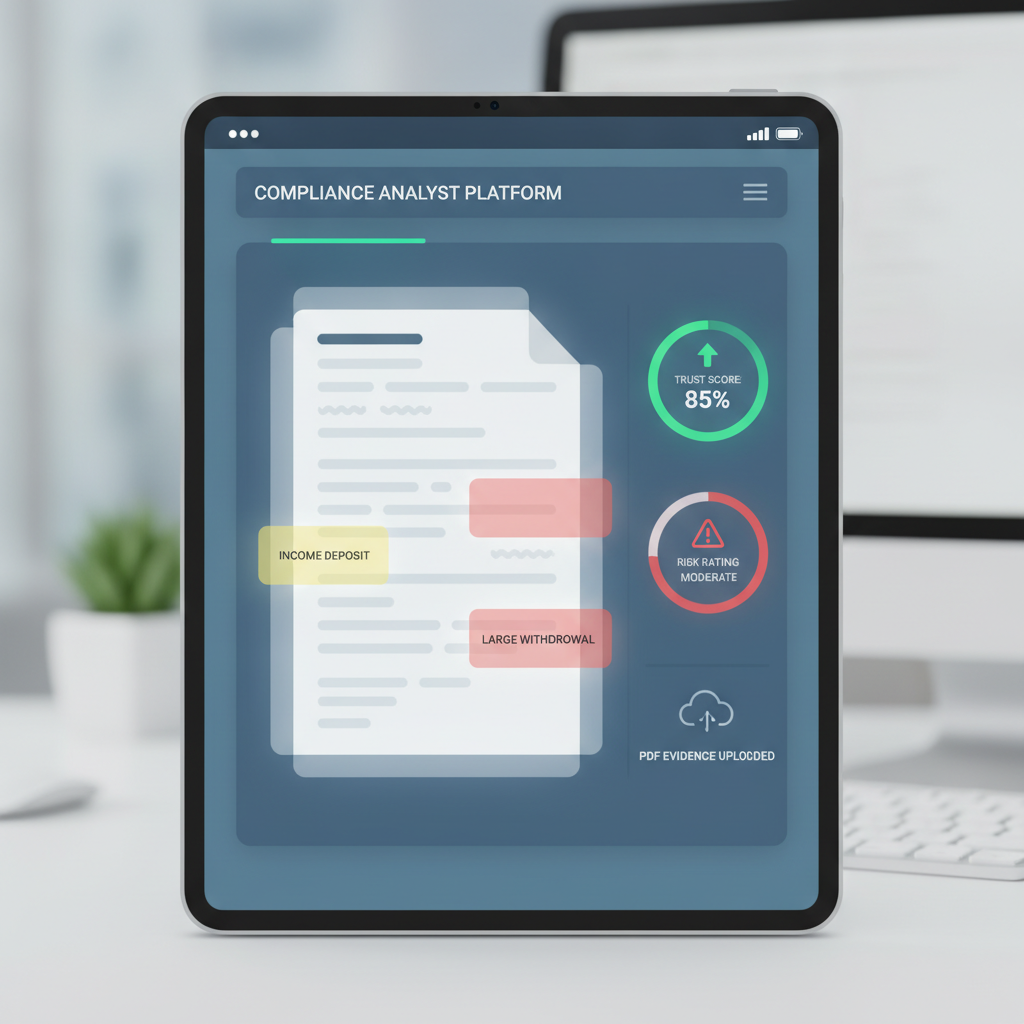
Source-of-funds checks are supposed to answer a business-critical question: does this money make sense for this customer, this transaction, and this risk profile?
In practice, the answer often depends on uploaded evidence. A customer sends bank statements, screenshots, exchange exports, or PDF files. An analyst reviews the story, checks whether the transactions appear consistent, and moves the case forward.
The missing control: a source-of-funds workflow can be logically sound while still trusting an unverified file. If the uploaded bank statement or PDF was manipulated before intake, the rest of the compliance review may simply become a cleaner way to organize bad evidence.
Why This Is a Real Source-of-Funds Problem
The current FATF Recommendations remain the international baseline for anti-money laundering and counter-terrorist financing controls, and the standard was last updated in October 2025. The guidance is risk-based by design, which is exactly why source-of-funds reviews keep surfacing in higher-risk onboarding, transaction monitoring, and escalation work.
The FCA handbook is also explicit that establishing source of funds can be useful for due diligence and ongoing monitoring because it helps firms test whether the level and type of transaction are consistent with what they know about the customer. In other words, the document review is not paperwork theater. It directly influences whether the case feels coherent enough to approve.
That is why uploaded bank statements matter so much. They often become the bridge between the customer narrative and the compliance decision.
What the Workflow Usually Checks Well
A mature source-of-funds workflow can already do several things well:
- collect explanations for large deposits, transfers, or unusual account activity
- compare the document to the customer story about income, savings, business activity, or asset sales
- apply risk rules based on jurisdiction, PEP status, transaction size, and business type
- route edge cases to enhanced due diligence or manual review
Those are important controls. But they do not automatically answer a different question:
Was the uploaded statement or PDF altered before it reached the analyst?
Why Bank Statements Become a Quiet Trust Anchor
Once a statement is inside the case, everything downstream tends to become calmer.
- OCR extracts the rows cleanly
- case notes inherit the same balances and transfers
- summaries make the activity look coherent
- the reviewer starts asking whether the funds make sense instead of whether the file itself earned trust
That is exactly the trap. A manipulated statement does not need to fool every control. It only needs to look stable enough that the rest of the workflow stops questioning the document.
Common patterns include selectively edited balances, removed transactions, recreated statement pages, screenshots that flatten provenance, and re-exported PDFs that preserve readability while hiding the edit path.
Source-of-Funds Review Is Not the Same as Document Authenticity
This distinction matters because compliance teams often use the phrase "verify source of funds" broadly.
But there are really two separate checks:
- Funds plausibility: do the flows, amounts, counterparties, and explanations fit the customer profile and the risk context?
- Document authenticity: does the uploaded statement or supporting file itself look trustworthy enough to use as evidence in that plausibility review?
If those checks collapse into one, the workflow can become very good at reasoning over a forged or altered file.
Where Bank Statement Verification Belongs
The cleanest sequence is:
- Collect the supporting statement or PDF through the onboarding or case-review flow.
- Run document verification at intake before OCR, extraction, case summarization, or analyst approval inherit trust from the file.
- Continue source-of-funds review on low-risk files using the normal AML checklist and transaction context.
- Escalate suspicious files for replacement, direct-source retry, deeper review, or additional evidence.
This does not slow the whole compliance stack. It keeps the case from compounding trust around an attachment that never earned it.
What DocVerify Can Credibly Check Here
Based on the current product and codebase, DocVerify is a fit for this step because it can analyze the file formats these workflows actually receive: PDFs and common image uploads.
Relevant signals in source-of-funds review include:
- metadata and edit-history anomalies that do not match the claimed origin of the file
- suspicious PDF structural signals such as unusual revision patterns, layered content, or hidden edits
- screenshot and recompression patterns that suggest a recaptured or flattened document path
- font and glyph inconsistencies around balances, dates, and transaction rows
- clone or tamper indicators where values or statement regions may have been patched
- model-based suspicious-region localization so analysts can focus on the highest-risk areas first
Those signals do not replace AML judgment. They stop the workflow from treating document presence as document trust.
Where This Matters Most
This workflow is especially relevant in:
- fintech and neobank onboarding when higher-risk users are asked for supporting financial evidence
- crypto and payments compliance queues where screenshots and exported PDFs often appear in escalation cases
- wealth, brokerage, and private-client reviews where bank statements help justify incoming funds
- property, legal, and transaction teams that still rely on statement evidence for source-of-funds explanations
In all of these cases, the compliance team still needs policy review, but the document itself should not bypass authenticity checks first.
Do Not Let a Good AML Workflow Trust a Bad File
If a bank statement is important enough to explain the source of funds, it is important enough to verify before the file shapes the case.
That is where DocVerify fits. Teams can screen uploaded bank statements, screenshots, and PDFs through https://docverify.app before source-of-funds review, OCR, or case notes start turning the file into trusted compliance evidence.
- Try DocVerify: https://docverify.app
- Related KYC angle: KYC Compliance for AI-Native Products
- Broader bank-statement fraud angle: Fake Bank Statements in Lending and Onboarding