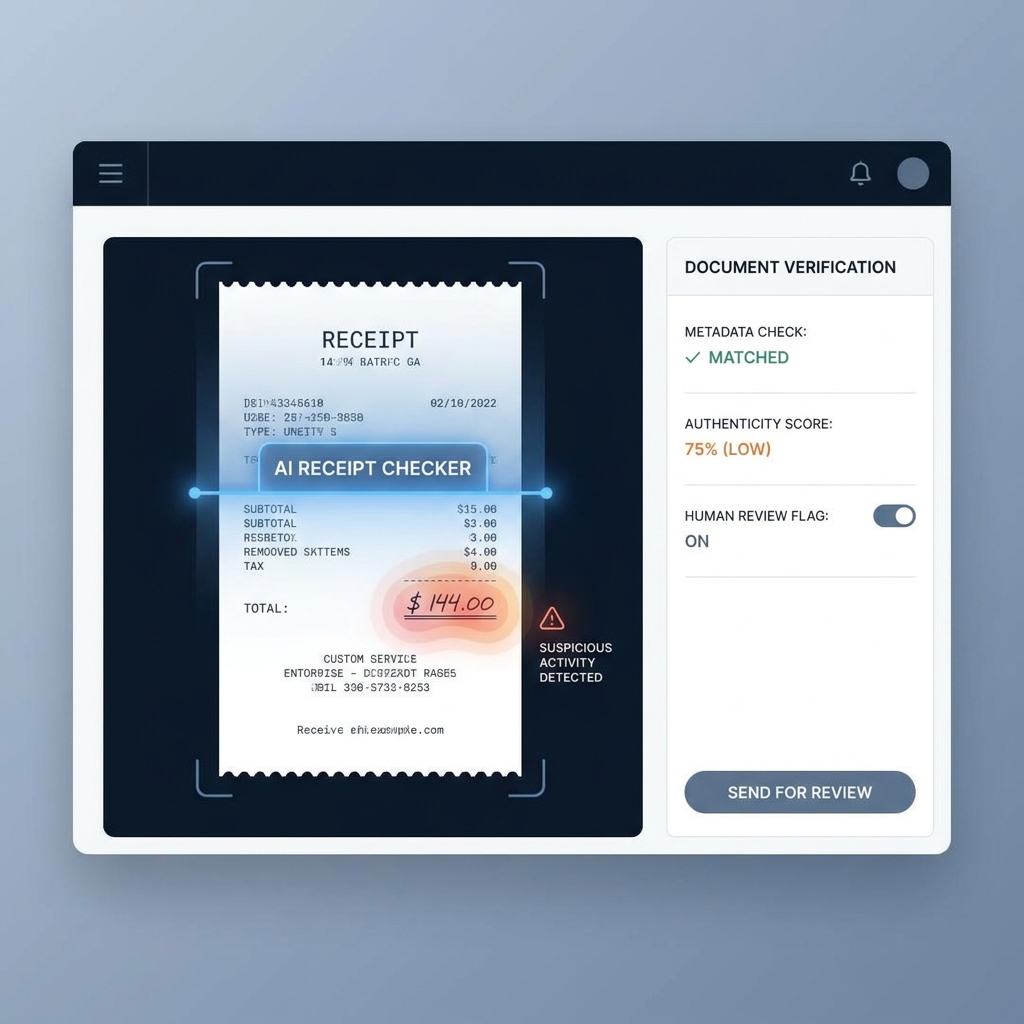
SAP Concur is leaning harder into AI in 2026, and the direction makes sense. At Fusion 2026, SAP highlighted new expense automation, pre-submit audit capabilities, and AI-driven receipt analysis meant to reduce manual work and tighten compliance.
SAPinsider also noted that SAP Concur is expanding an AI-generated receipt checker inside Intelligent Audit to help auditors catch receipts that appear to come from AI tools or online templates.
The practical takeaway: better AI auditing inside Concur is valuable, but it still does not eliminate the need to verify whether the uploaded receipt deserves trust before the workflow starts moving.
Why This SAP Concur Update Matters
For AP managers, finance controllers, and Concur admins, the significance is not just “SAP added more AI.” It is where that AI now sits in the workflow.
According to SAP’s Fusion 2026 announcements, Concur is pushing further into:
- Expense Automation Agent behavior that prepares expense reports with less manual input
- Expense Pre-Submit Audit that flags discrepancies earlier in the reporting flow
- receipt analysis and AI-assisted validation that help standardize review
- more embedded user workflows so receipts are captured and processed with less friction
That is good operationally. It also means the receipt becomes trusted faster.
When a platform gets better at reading, routing, and validating submitted receipts, the remaining question gets more important:
Was the uploaded receipt authentic before all of that automation started acting on it?
What the AI-Generated Receipt Checker Likely Solves Well
SAP Concur’s newer controls appear designed to identify receipts that look suspiciously synthetic, templated, or inconsistent with expected submission patterns. That is useful because fake receipts are no longer limited to crude edits.
In real expense programs today, fraud can come from:
- online receipt generators that produce plausible merchant receipts instantly
- lightly edited originals with changed totals, dates, tax, or merchant fields
- screenshots and re-exports that flatten or hide the document history
- AI-assisted variants that look operationally routine at reviewer speed
An AI-generated receipt checker is a sensible answer to that trend. It can help surface higher-risk receipts, create more consistent audit handling, and reduce the burden on human reviewers who would otherwise have to visually inspect every claim.
That is real progress. I’m glad SAP is moving in that direction.
What It Still Does Not Solve
Even a better audit signal is not the same thing as a full document-authenticity decision.
Concur’s workflow is still built to do several other jobs:
- capture and organize receipts
- extract expense details
- check policy compliance
- route reports for audit and approval
- move clean claims toward reimbursement or ERP posting
Those are workflow strengths. But a workflow can remain perfectly orderly while trusting a receipt that should have been questioned much earlier.
A manipulated receipt may still:
- extract cleanly
- fit policy thresholds
- look normal in a reviewer queue
- arrive with enough context to seem legitimate
If that happens, the automation is not malfunctioning. The trust assumption is.
This is the same broader AP lesson behind Invoice OCR Is Not Invoice Trust: once a document enters a clean workflow, process quality can mask document risk.
Why the Best Place for Verification Is Still Intake
The safest architecture is not “let more downstream steps inspect the receipt later.” It is “decide earlier whether the receipt should be trusted at all.”
- Employee uploads receipt through mobile capture, email, or integrated workflow
- Document verification runs first on the original file
- Clean receipts continue into extraction, pre-submit audit, Intelligent Audit, and approval
- Suspicious receipts branch into a smaller review queue with evidence
- Reimbursement and ERP posting happen only after both workflow and document trust look sound
That design preserves the benefits of SAP Concur automation while preventing the platform from compounding confidence around a forged upload.
What a Verification Layer Should Check Before Concur Trusts the Receipt
Based on the current DocVerify product and codebase, relevant checks for SAP Concur receipt workflows include:
- metadata anomalies that do not match the claimed creation path
- suspicious PDF or image structure that suggests editing or regeneration
- font and glyph inconsistencies around totals, dates, merchant names, or tax lines
- clone and tamper signals where receipt regions appear patched or duplicated
- screenshot and recompression patterns that indicate recapture or edit masking
- model-based suspicious-region localization so auditors can see where to look first
Those checks do not replace Concur. They answer a different question from policy and audit logic: whether the underlying file deserves trust before the rest of the stack starts optimizing around it.
The Concur Admin View: Stronger Audit Rules Are Not Enough by Themselves
If you administer SAP Concur, it is tempting to treat better AI audit tooling as the finish line. In practice, it is closer to a stronger middle layer.
Audit rules, AI checks, and reviewer workflows all become more effective when the receipt arrives with an authenticity signal already attached. Without that signal, teams are still asking downstream controls to infer trust from a document they did not verify at intake.
That matters most for:
- high-volume expense programs where reviewers move quickly
- shared-services teams that depend on standardized queues
- enterprise ERP environments where approved expense data flows into broader finance systems
- AI-assisted expense operations where automation now touches more of the report lifecycle
SAP Concur Is Getting Smarter. The Trust Layer Still Has to Come First.
SAP Concur’s 2026 AI additions are a meaningful improvement for finance teams. But they do not change the core boundary: receipt analysis, policy validation, and approval automation are not the same thing as proving that the uploaded receipt is genuine.
If your team relies on SAP Concur to move expense reports faster, the right move is not to slow the system down. It is to add a document-authenticity gate before the rest of the workflow inherits trust from the upload.
- Try DocVerify: https://docverify.app
- Related AP reading: Invoice OCR Is Not Invoice Trust
- Workflow fit: DocVerify can sit in front of receipt OCR, pre-submit audit, Intelligent Audit, and ERP approval steps as a document-authenticity layer for uploaded files.